
A 3-bedroom townhome fits families or roommates who want more space and a private entrance than an apartment offers, without the full cost and yard work of a detached house. It fits less well if sharing zero walls with neighbors is your top priority, or if you specifically need a single-level layout, since most townhomes aren’t built that way.
Townhome vs. House vs. Apartment: What the Category Actually Buys You

| Property type | Typical national rent | What drives the range |
|---|---|---|
| Apartment | $1,659 to $1,750/mo | Unit size, building amenities, garden-style vs. mid-rise |
| Townhome | No tracked national figure; positioned between the other two rows | HOA fee presence, private entrance or garage, unit age |
| House | About $2,018/mo | Full private yard, no shared walls, wide size variability |
The apartment-to-house gap above is a real, sourced difference of roughly $270 to $360 a month nationally. The townhome row is deliberately left without a number: no HUD series, Census series, or major rental-market report breaks out rent by bedroom count specifically for townhomes, so any figure claiming to do so is an estimate dressed up as data. What’s consistently true across the sources checked: townhomes sit between apartments and houses on both space and privacy, with one or two shared walls against an apartment building’s many, and a private entrance an apartment usually lacks.
How does a 3-bedroom townhome usually compare in price to a 3-bedroom house? It typically costs less than an equivalent detached house and more than an equivalent apartment, though the exact gap varies by market and by whether an HOA fee applies on top of base rent.
What “Townhome” Means, Legally and Structurally
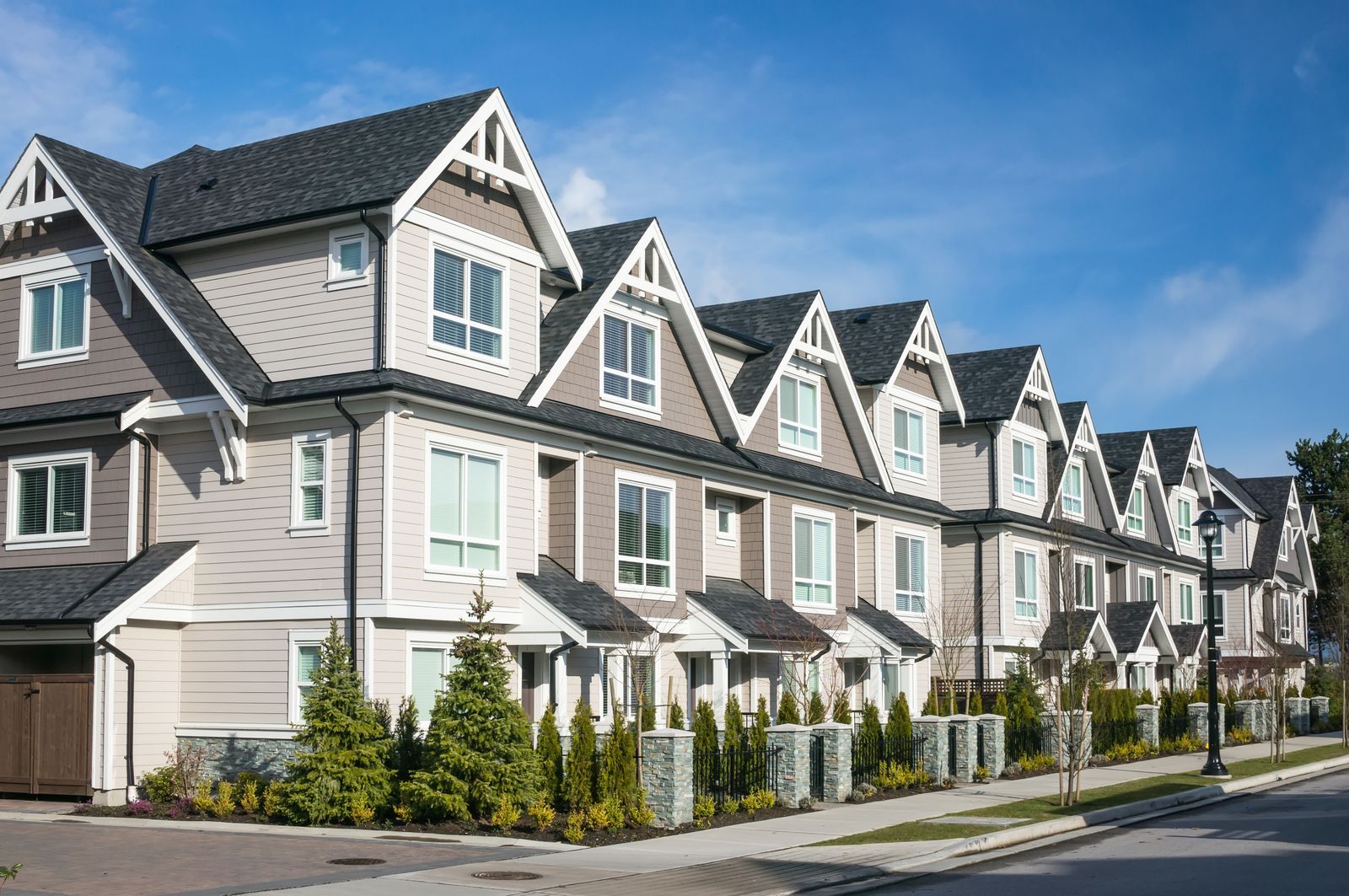
The Census Bureau defines it precisely: a “single unit, attached” structure has one or more walls extending from ground to roof, separating it from the neighboring unit, a category the Bureau notes is commonly called a “townhouse,” “row house,” or “double house” (U.S. Census Bureau, 2023 ACS subject definitions). Single-family attached housing made up 5.6 percent of the U.S. housing stock as of the 2000 Census, per the Bureau’s historical housing tables, a small and fairly stable slice of the national inventory.
HOA Fees and Who Actually Pays Them
| Fee element | Typical monthly range | Who’s usually on the hook |
|---|---|---|
| Base rent | Market rate | Tenant, always |
| HOA or community fee | $200 to $300 | Owner by default; can shift to tenant by lease |
| Special assessments (roof, major repair) | Often four figures, one-time | Owner |
Legally, HOA dues are billed to the property owner and the owner stays responsible even when a lease assigns payment to the renter (Redfin). A landlord who wants a tenant covering the fee has to write that obligation into the lease directly, or fold the amount into the listed rent. If a listing’s base price looks unusually low for the area, ask whether an HOA fee applies on top of it before you sign.
Do townhome renters pay HOA fees directly, or are they built into rent? Usually neither by default: the owner is billed and stays liable, but many landlords roll the cost into monthly rent or bill it as a separate line the lease has to spell out.
Bedroom Count Doesn’t Tell You the Layout
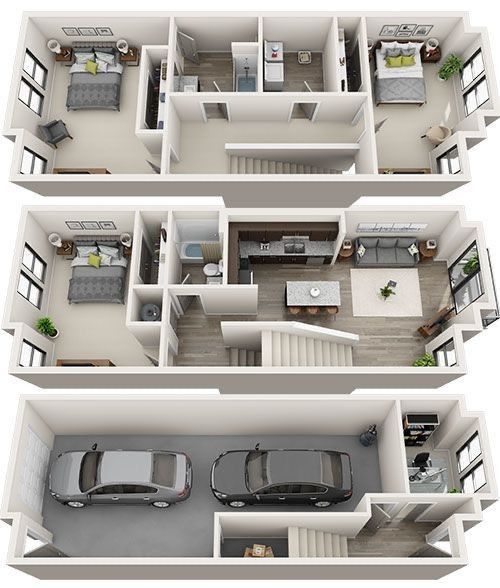
“Three bedrooms” reads the same on a filter whether it’s a single-level apartment or a three-story townhome. In practice, most 3BR townhomes split bedrooms across two or three floors rather than one, and that reads differently depending on the household.
- Families with young children often want bedrooms clustered on one floor, which fewer townhomes offer than detached houses do.
- Roommates frequently prefer the opposite arrangement, spreading bedrooms across floors for more separation between household members.
- Remote workers should check whether a den or flex room exists apart from the three counted bedrooms, since townhome floor plans vary more here than standardized apartment layouts do.
Who’s Responsible for What: Landlord, HOA, Tenant
| Task | Landlord | HOA | Tenant |
|---|---|---|---|
| Exterior building repair | Usually | Sometimes, if HOA-covered | Rarely |
| Lawn and landscaping (shared areas) | – | Often | – |
| Interior maintenance | Usually | – | Reports issues |
| Trash and snow removal (shared) | – | Often | – |
| HOA dues payment | Legally, always | Bills the owner | Only if lease reassigns it |
| Rule compliance (parking, pets, noise) | – | Sets the rules | Must comply |
The split above is the default pattern. Any individual item can move by lease, which is why the lease itself settles the question in a specific tenancy, general expectations don’t.
Where Renters Get This Wrong
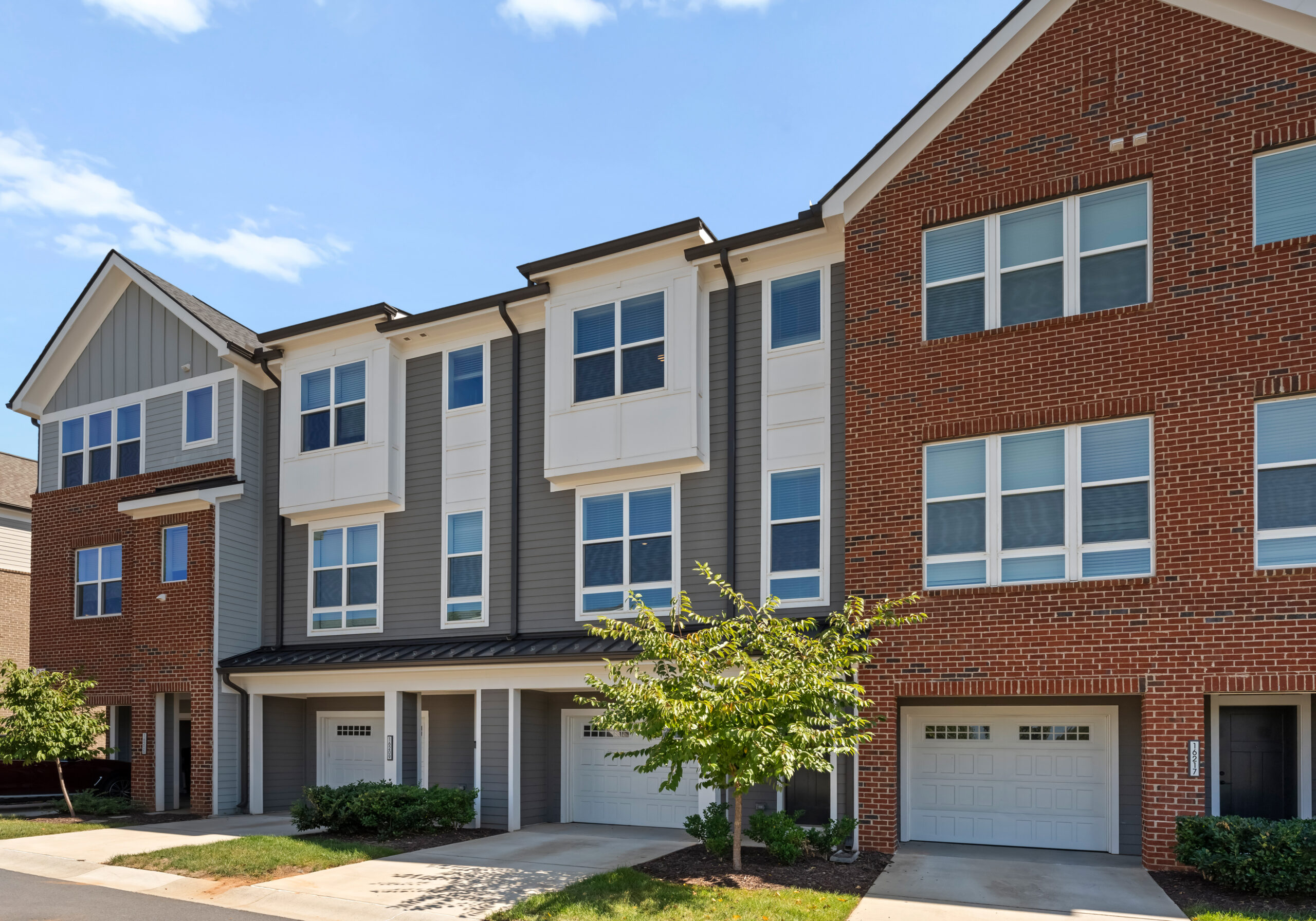
- Assuming “townhome” means no shared walls. It almost always means one or two shared walls, just fewer than a typical apartment building.
- Signing without asking about HOA fees. A base rent that looks cheap can still land above a comparable house once a $200 to $300 fee is added on top.
- Assuming a single-level unit is available. Most 3BR townhome floor plans put bedrooms upstairs; ask specifically if that matters to you before touring.
- Not checking who mows the lawn. In an HOA-governed community, shared landscaping is usually centrally handled. Outside an HOA, yard upkeep more often falls to the tenant than it would in an apartment lease.
Who mows the lawn or maintains the yard in a rented townhome? Depends on whether the community has an HOA. If it does, shared landscaping is usually HOA-handled; if not, yard upkeep more often falls to the tenant than it would in an apartment lease.
What the Segment’s Supply Data Signals for Agents and Investors
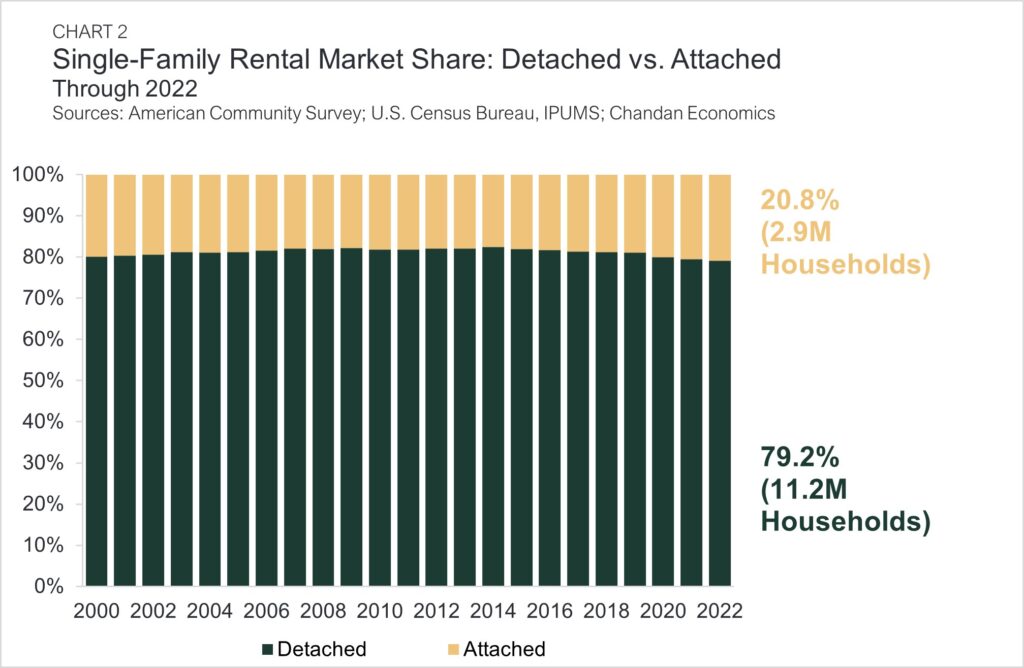
Single-family and townhome rental supply has been contracting, not growing: total single-family rental stock has fallen from roughly 15.2 million to about 11.3 million units in recent years, and only 14 percent of single-family homes nationally are renter-occupied today, the lowest share on record, per Redfin data reported by MoveZen360. Multifamily is moving the opposite direction, with vacancy at 7.4 percent, a series high, per Apartment List data cited in the same report.
Is a 3-bedroom townhome usually cheaper or more expensive than a 3-bedroom house to rent? Usually cheaper, though the gap narrows or disappears once an HOA fee gets added to the townhome’s base rent.
Fee structures, HOA prevalence, and layout norms vary significantly by region. The figures above are national directional patterns, not city-specific numbers; use a listing platform’s local filters for the actual range in your market.
Comments