
Is West 26th Street the same market as East 26th Street? No. West 26th sits in the rezoned West Chelsea Historic District, dominated by loft and former-industrial commercial space; East 26th sits in NoMad/Flatiron, dominated by small-scale prewar condo conversions near Madison Square Park. The building stock, financing path, and price band differ by segment, not by a single street-wide trend.
West 26th Street: the Chelsea/High Line corridor
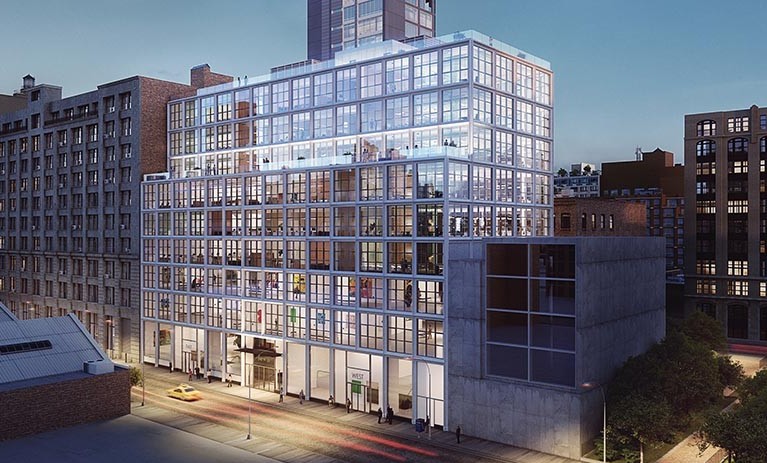
The single most-cited building on this block, the Starrett–Lehigh Building at 601 West 26th Street, is not residential at all. Built in 1930–31 by the Starrett Corporation and the Lehigh Valley Railroad to the design of Cory & Cory with Yasuo Matsui as associate architect, the 2.3-million-square-foot structure has been Class B loft office space since the late 1990s and was landmarked in 1986. RXR Realty bought it in 2011 for $900 million from Shorenstein Properties, per SquareFoot’s building profile; current tenants include the Ralph Lauren Corporation, Tommy Hilfiger USA, and ICE. An investor scanning “26th Street real estate” and expecting a home for sale at this address will find leased commercial suites instead.
The residential inventory around it sits in the West Chelsea submarket, whose current StreetEasy figures ($3,075,000 median, $2,303 per square foot average) run meaningfully above the Chelsea-wide average of $2,080 per square foot. That premium traces to the 2005 Special West Chelsea District rezoning, which converted these blocks from manufacturing use to mixed commercial-residential zoning and cleared the way for 15 new residential buildings adding roughly 2,000 units, a 50 percent jump on the roughly 4,000 units the area already had.
A peer-reviewed GIS study published via ScienceDirect found that homes closest to the High Line saw a 35.3 percent increase in housing values following the park’s opening, with the largest premium going to units at the same elevation as the elevated walkway. That figure is the actual mechanism behind West Chelsea’s per-square-foot premium.
Does proximity to the High Line actually change price on this block? Yes, and by a specific, sourced amount: the peer-reviewed figure is a 35.3 percent value increase for the closest homes, concentrated in units that share the High Line’s elevation.
East 26th Street: the NoMad/Flatiron corridor
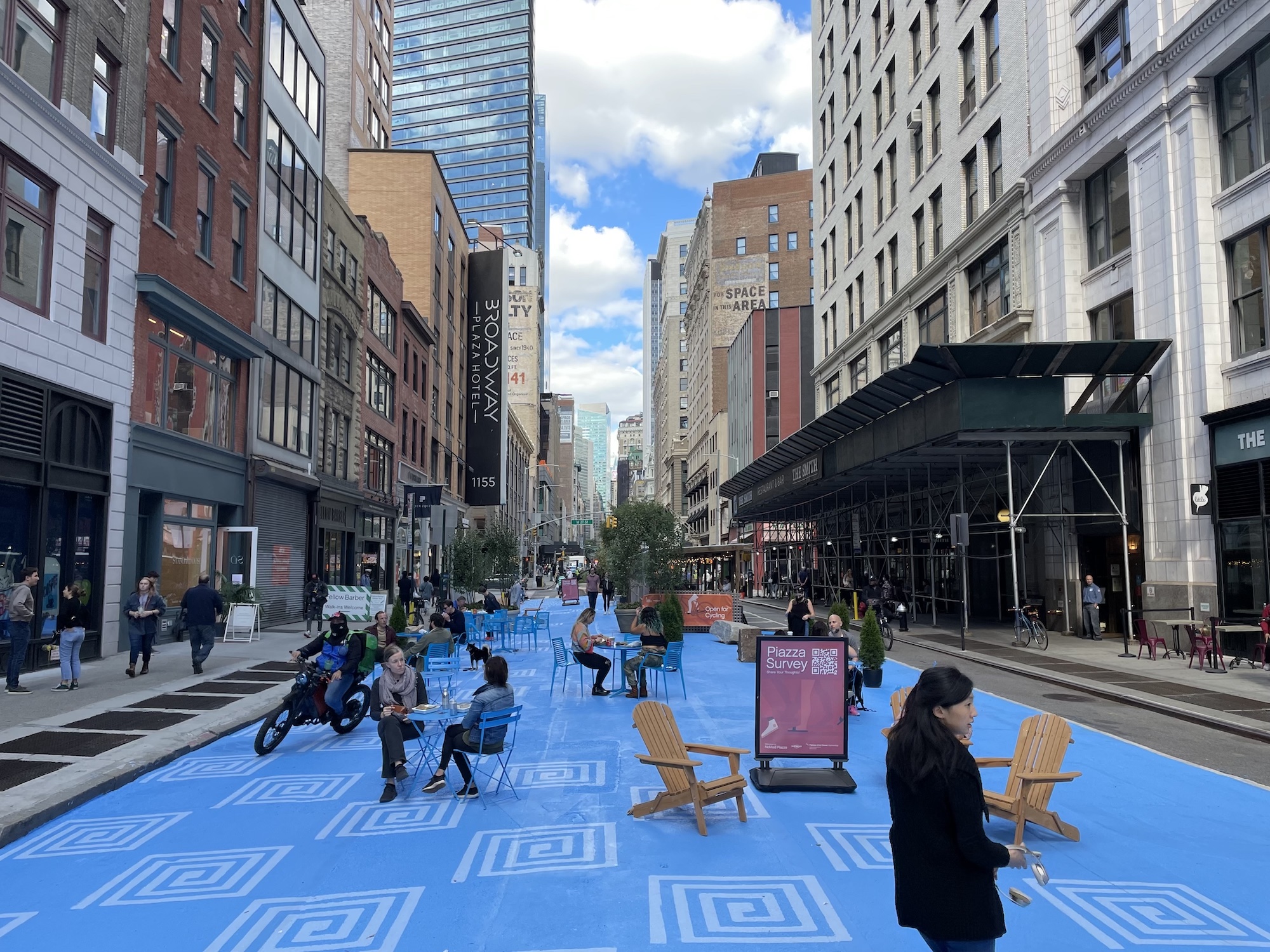
East 26th Street forms the northern boundary of Madison Square Park, a 6.2-acre public space that opened on May 10, 1847. The block just northeast of the park, at Madison Avenue and 26th Street, was the site of the first and second Madison Square Gardens; the arena took that name in 1879 under owner William K. Vanderbilt before moving uptown in 1925, per the Madison Square Park Conservancy. None of that history translates into homes for sale, but it explains why the east end of the street reads as park-front rather than industrial.
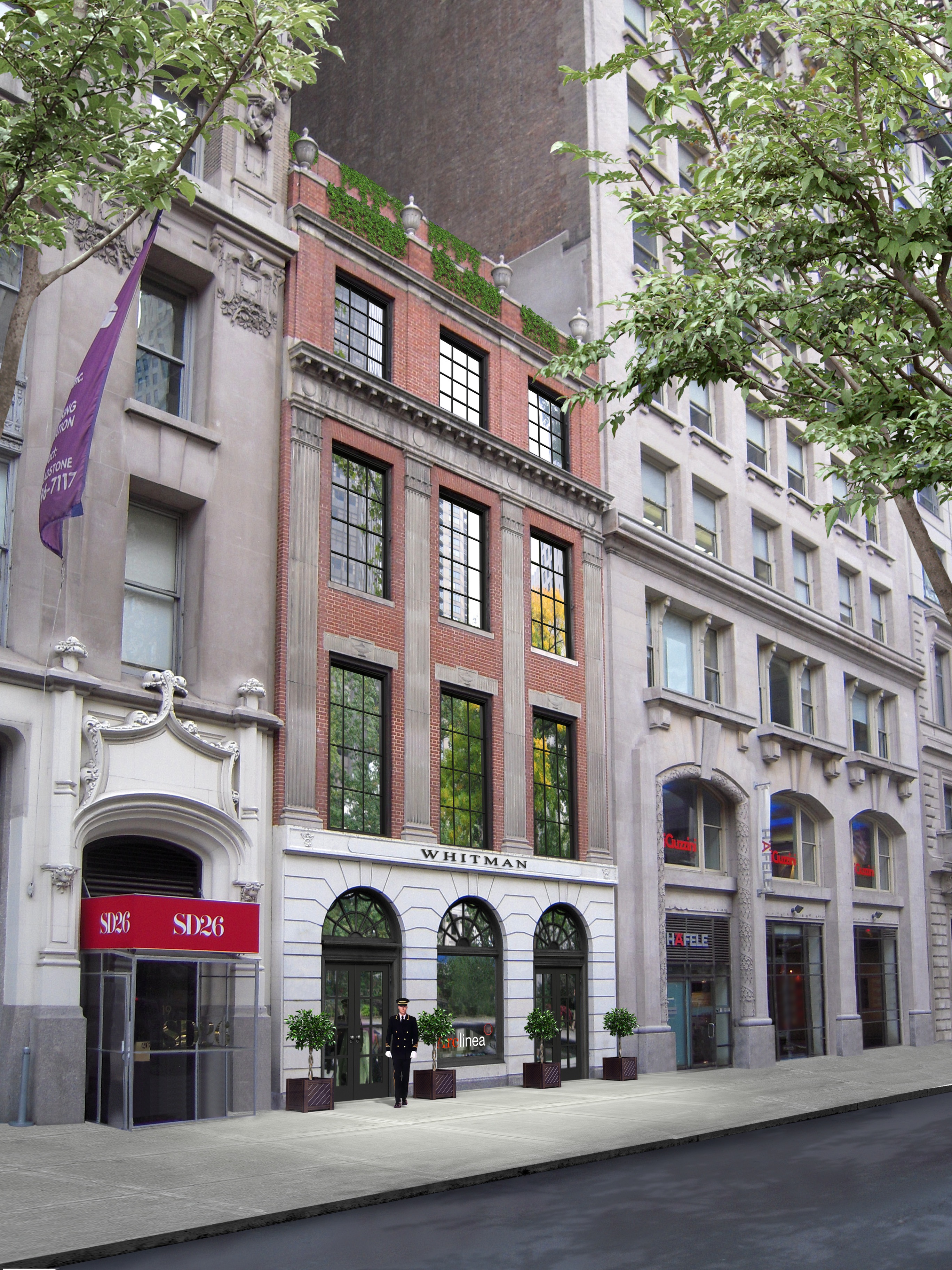
The residential stock here is almost entirely prewar commercial buildings converted into small condo counts. The Whitman Mansion at 21 East 26th Street, built in 1924 as the Clarence B. Whitman and Sons textile company headquarters, was converted into four luxury condominiums in 2012 by developer David Mitchell with architect Jeffrey Cole; recent sales there average roughly $2,723 per square foot. One data point from that building, reported by 6sqft: a four-bedroom penthouse there sold to Jennifer Lopez for $20.16 million in 2014 and was later listed near $26.95 million.
A few doors down, Fifteen Madison Square North at 15 East 26th Street runs the same condo model, while Twenty Ninth Park Madison at 39 East 26th Street is a rental building, pricing by monthly rent roll rather than sale comparables. One block away, the Flatiron Building at 175 Fifth Avenue shows where this segment is heading: developer Jeffrey Gural bought the emptied office tower for $161 million in 2023, and the Brodsky Organization and Sorgente Group are converting it into residential condos, with two units listed in 2026 at $15.3 million and $18.9 million. The Flatiron conversion extends the same pattern already visible at the Whitman: existing prewar buildings turned into condos, block by block.
Building stock and financing: what the two segments actually sell
| Segment | Dominant building era & type | Typical financing path | Price context | Defining landmark |
|---|---|---|---|---|
| West 26th (Chelsea/High Line) | 1930s industrial/loft, Class B commercial (Starrett–Lehigh); newer residential towers post-2005 rezoning | Commercial mortgage for loft office space; standard condo financing for post-rezoning residential towers | $2,303/sq ft avg, $3.075M median (West Chelsea submarket) | Starrett–Lehigh Building, 601 W 26th St |
| East 26th (NoMad/Flatiron, condo) | 1920s commercial/textile buildings converted to small-count condos | Standard condo mortgage, right of first refusal only | ~$2,723/sq ft avg (Whitman) | Madison Square Park / Whitman Mansion |
| East 26th (NoMad, rental) | Purpose-built or converted rental towers (Twenty Ninth Park Madison) | No purchase financing; leasing income qualification only | Priced by monthly rent, not sale comps | Madison Square Park |
The table shows the actual financing fork on this street: a West 26th loft suite is underwritten as commercial real estate, an East 26th condo like the Whitman closes on ordinary residential financing with no board review, and an East 26th rental building isn’t a purchase decision at all.
Is a building near Madison Square Park on 26th Street a co-op or a condo? The named buildings on this specific block, the Whitman and Fifteen Madison Square North, are condominiums, structured with a right of first refusal instead of a co-op board package. Co-op packages are common on nearby Flatiron and Gramercy blocks, not on these two 26th Street buildings.
Zoning: one rezoning, two building pipelines
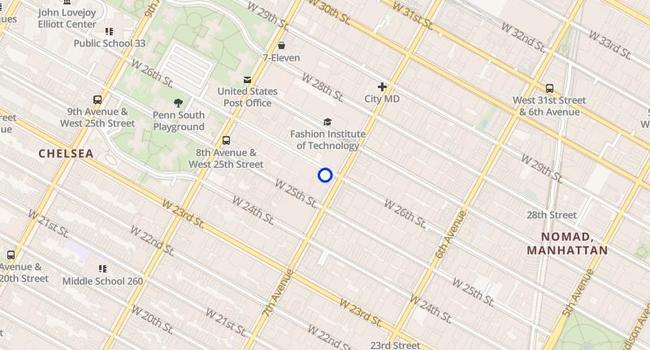
The 2005 Special West Chelsea District rezoning explains most of the divergence above: it shifted the blocks between Tenth and Eleventh Avenues from manufacturing to mixed commercial-residential use, clearing the path for loft conversions and new towers near the High Line. The Madison Square Park end never received a comparable rezoning; its prewar commercial buildings opened to residential buyers through private condo conversions like the Whitman, one building at a time.
Common mistakes on this corridor
| Assumption | Why it’s wrong here | What to check instead |
|---|---|---|
| “Chelsea” pricing applies across the whole street | Neighborhood-wide averages blend the West Chelsea submarket with lower-priced interior blocks | Ask for the West Chelsea submarket figure specifically |
| Starrett–Lehigh-style space can be bought as a home | It is leased Class B commercial office space under a commercial certificate of occupancy | Confirm the certificate of occupancy and use classification before treating a West 26th listing as residential |
| A condo at 21 or 15 East 26th requires a co-op board package | Both buildings are condominiums with a right of first refusal only | Check the offering plan for the approval process before setting a closing timeline |
| Whitman-level per-square-foot pricing applies to rental buildings like Twenty Ninth Park Madison | Rentals price by monthly rent roll, a completely different metric from condo sale comparables | Separate rental asking-rent data from condo sale comps when budgeting |
Who each segment actually suits
- Buyers wanting raw, light-filled loft character: West 26th, though expect to find gallery and office space rather than homes for sale at the most famous address.
- Investors seeking income-producing commercial space: West 26th’s Class B loft buildings, underwritten as commercial mortgages.
- Buyers wanting a turnkey condo near a landmarked park: East 26th, in small-count buildings like the Whitman or Fifteen Madison Square North.
- Agents advising board-averse clients: East 26th’s condo conversions clear faster than the co-op stock common on adjacent Flatiron and Gramercy blocks.
A caveat that applies to both ends: any single street segment still contains outliers, a lone rental tower among condos or a leased office floor inside an otherwise residential block, so treat this framework as directional, not as a guarantee for one specific address.
Comments